


Phonics, Early Reading and Writing
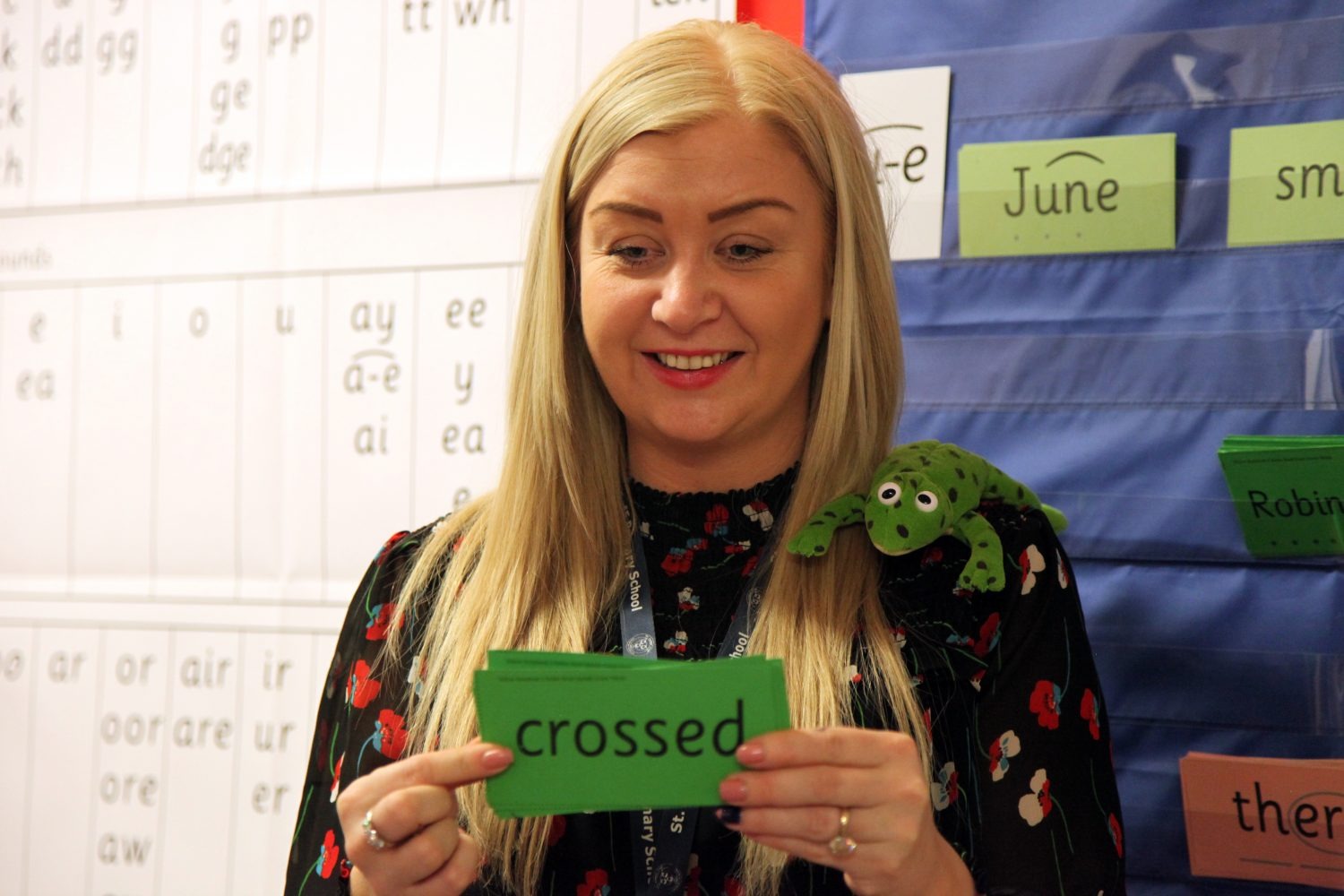
Successful communicators, readers and writers begin their journey in EYFS. In the EYFS we start strong and begin teaching phonics, using the Read Write Inc. Phonics programme, as soon as the children are in class full time. Daily phonics lessons allow students to learn the graphemes, digraphs and trigraphs needed in order to decode words. The students are taught in groups which are then assessed and changed half-termly to ensure every child is challenged in their own learning. A rigorous tracking system allows for immediate identification of children falling behind expected progress and shows the impact of one-to-one tutoring. To promote an early love of reading, children in EYFS are read a wide variety of stories during class time and encouraged to share the books and stories they love too.

Reception English overview
Click here for the Reception English overview…

Reading and Phonics Scheme
Phonics forms the building blocks of reading and writing and equips children with the skills needed to become independent readers. In Phonics, children are taught the sounds and how to match them to letters and decode the words in order to read them. This is an essential skill for them to develop to read unfamiliar words by themselves and begin to read independently.
Children in Reception and Key Stage 1 follow the Read, Write Inc. Phonics programme. It is an approach to teaching phonics in which individual letters or letter sounds are blended to form groups of letters or sounds, and those groups are then blended to form complete words.
Read Write Inc. combines 5 clear steps to ensure real success in literacy:
● A systematic and dynamic whole-school approach
● High quality teaching
● Inspiring whole-school training
● Effective assessment and grouping
● Keeping parents fully engaged and supportive
Reception
In Reception, children will start by learning the letters and the sounds they make, and how to put them together to read simple words. For example, once they know the individual sounds for ‘s’, ‘a’ and ‘t’ they can then blend them together to form the word ‘sat’.
Once familiar with all the single letter sounds, children in reception will begin to recognise digraphs (two letters that make a sound, such as sh, ay, ee) and trigraphs (three letters than make the sound such as igh) and
read words and sentences containing these. They will also develop their ability to write individual letters, using rhymes to support their formation.
Once children are able to blend simple CVC words, phonetically decodable books that are matched closely to their phonics stage are sent home with the children in order to practice and secure the skills learnt in school.
Key stage 1
The students continue to work their way through the RWI programme in Key stage one, learning the rest of the set 2 and set 3 digraphs and trigraphs. They will continue to read phonetically decodable books in lessons to further develop their decoding skills alongside their reading speed and fluency. Children will have a chance to answer questions about the stories, and showcase their understanding by talking about what they have read.
The students will also further develop their spelling skills, ensuring they can segment the sounds they can hear in the words in order to write them, building up to writing short sentences.
At the end of Year 1, children complete the statutory phonics screening check, a simple test made up of 40 real and nonsense words. This assesses phonics skills and knowledge learned through Reception and Year 1. It is designed to give teachers and parents information on how your child is progressing in Phonics, and allows teachers to put interventions in place for those children not progressing as expected. Children who do not pass the PSC in Year 1 will retake the test at the end of Year 2.

Literary Journey
We believe that books open the doors to a world of imagination! Please look at the Literary journey the children in our school will travel on a they move through the years… Please see pour literacy journey below.

